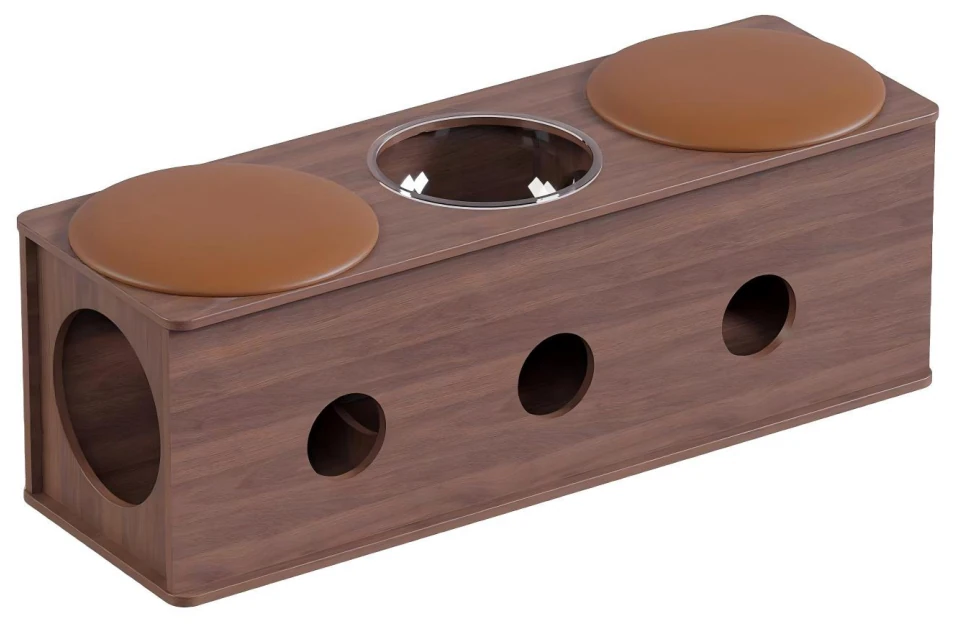
1. Identify the exact bench construction
NAV-F018 / M1018 measures 1200 × 400 × 450 mm and combines seating with front cat openings, an enclosed passage, a resting capsule and a rear scratching pad. The catalogue specifies board construction but does not identify the core. Request a component-level composition statement covering the structural panels, surface layers, capsule and scratching surface; do not let one general word such as “wooden” stand in for that inventory.
Walnut and oak appear among the finish descriptions; they do not establish solid timber species. Confirm the chosen combination from the listed walnut, oak, cream white, mist blue, ginger yellow and sage green options before requesting further evidence.
2. Make a second record for transport materials
List cartons, pallets, crates, bracing and loose dunnage separately. Record each element’s material, use, supplier and entry point into the shipment. A carton-only proposal must still explain consolidation, palletisation and container securing. Assign responsibility for reviewing any changed supports.
Request photographs of the final packing configuration and any relevant treatment or marking evidence. Connect each image to the proposed consignment, showing the supports as well as the cartons. A reusable photograph of an empty pallet is insufficient to identify the materials that accompany these benches. Record actual packed dimensions and weights separately: the bench’s exterior dimensions cannot be used as carton measurements or a freight-volume calculation.
- Product sheet: component, composition, construction evidence and selected bench version.
- Transport sheet: packing element, material, supplier, final photograph and consignment reference.
- Release sheet: importer review, unresolved evidence, substitution owner and decision date.
3. Check BICON against both records
DAFF directs timber and wooden-article importers to the current BICON conditions and explains the importer’s responsibility for supporting evidence. Its separate packaging guidance distinguishes material types and whether packaging is itself imported or supports other cargo. Give both records to your importer or broker before they choose the applicable cases.
Keep the review tied to the confirmed materials and actual shipping arrangement. Ask the reviewer to identify which questions remain open, which evidence is required and what changes would require another check. Do not assume that processed appearance creates an exemption, every board product requires the same treatment, or a packaging document covers the furniture itself. Save the decision with the relevant BICON case reference and review date.
4. Resolve the file before cargo is booked
Agree who obtains the composition statement, packing declaration, applicable evidence and dispatch photographs. Use a register with an owner, required input and release status for each item. If the forwarder adds supports later, update the transport sheet and send the change back for review. Specify a practical checkpoint before the shipment is finalised, rather than finding the difference only in arrival photographs.
Keep transport booking and product approval as separate decisions. The bench sample may be visually accepted while its import file is still incomplete; neither approval should silently stand in for the other.
5. Examine the sample and the unpacking sequence
Ask the sample sender to use a packing method representative of the proposed order, identifying any special sample differences. Photograph carton identifiers, opening sequence, component positions and removed protection. Count the hardware and inspect panel edges, cat openings and capsule attachments. Record the measured exterior against agreed tolerances. The sample cannot establish seat count, load capacity or suitable cat size without additional evidence.
Record visible contamination or unusual damage and ask the responsible importer how it should be handled. Keep that finding separate from cosmetic inspection. Also rehearse the receiving process: who compares the packing record, where photographs are stored and who decides whether an unexplained material change needs review. A clean-looking sample and successful assembly cannot establish the biosecurity status of a later consignment.
6. Worked example: a late pallet substitution
Hypothetical example: an Australian buyer approves one bench sample and plans a wholesale consignment. The product file identifies the panels, but the forwarder proposes a different pallet during consolidation. The buyer adds the substituted pallet to the transport-material record and asks the broker what evidence applies to that configuration.
The booking decision stays open until the new pallet material and required supporting evidence have been reviewed. The buyer asks for updated final photographs showing the substituted supports and records who released that revision. The approved finish and assembly observations need not be rewritten unless the bench changes. No treatment method, exemption or clearance outcome is assumed, and no unverified costs are used to make the decision.
7. Give the receiving team the same references
At dispatch, reconcile the packing list, carton identifiers, product version and document register. Give the receiver the final packing photographs and a short difference-reporting form. Agree where suspect or damaged items can be held while the responsible person reviews them, following applicable instructions. A reorder should refer back to the approved records, while changes to packing materials receive fresh review instead of inheriting an old approval.
For a NAVORIQ enquiry, state your company type, Australian destination, NAV-F018 / M1018, estimated quantity and proposed transport route. Ask for the unresolved product and packing evidence by name. Minimum quantity, sample terms, freight basis and document responsibilities require written confirmation for your project.
Before Australian cargo booking
- Confirm the selected bench version and component-level material inventory.
- Record all transport supports, their materials and the point where they enter the shipment.
- Have the importer review current BICON cases for the product and packing separately.
- Match required evidence and final photographs to the actual consignment.
- Review consolidation changes and hand the released references to the receiving team.
Australian import preparation questions
Does a treated pallet prove the bench is approved?
No. Packaging and product construction require separate assessment against the applicable conditions.
Can the colour name establish timber species?
No. The catalogue lists finishes and board construction; exact material composition must be confirmed.
Can NAVORIQ promise automatic biosecurity clearance?
Clearance cannot be inferred from a generic guide. Your importer or broker must confirm the requirements and review exact shipment evidence.
Product descriptions follow the current NAVORIQ catalogue record. They are not independent test results. Confirm the exact version, evidence and commercial terms before ordering. NAV-F018 / M1018 — product details in English
Official sources and further reading
- DAFF — timber and wooden-article imports
Official BICON starting point and importer responsibilities; not a model clearance decision.
- DAFF — timber and bamboo packaging
Separate packaging guidance; review the actual materials and cargo use.
Request a two-file bench sourcing brief
Send your business details, Australian destination, model and quantities with separate questions about product composition and transport materials. NAVORIQ replies in English or Chinese.